[Heads up campers, this post is going to get deep in the weeds about my bicycle. Normal people, as opposed to bicycle geeks, should feel free to skip this one.]
“The bicycle is the most efficient machine ever created. Converting calories into gas, a bicycle gets the equivalent of three thousand miles per gallon.” — Bill Strickland
My love affair with bicycles began when I turned six, my father let go of the back of my bicycle seat, and I felt like I was flying. It’s never stopped. In my freshman year of college, a seminal article came out in Scientific American that touted the efficiency of bicycles compared to any animal or machine (sorry it’s so blurry).

How cool. In terms of energy (measured in calories) per kilometer of travel, the bike stands head and shoulders above (or in this case below) any other form of transport. Five times more efficient than a person walking. It helps balance, it’s good for your weight, good for your knees, good for your heart, and good for climate change. What’s not to like?
Of course it helps if you have a dream machine. I can look back nostalgically and think of every bike I’ve ever owned, but they all seemed to be building to the current model, a Carver, designed by Davis Carver in Maine (using the specs from my custom-made* Seven), fabricated by Waltly in China. How do I love thee? Let me count the ways.

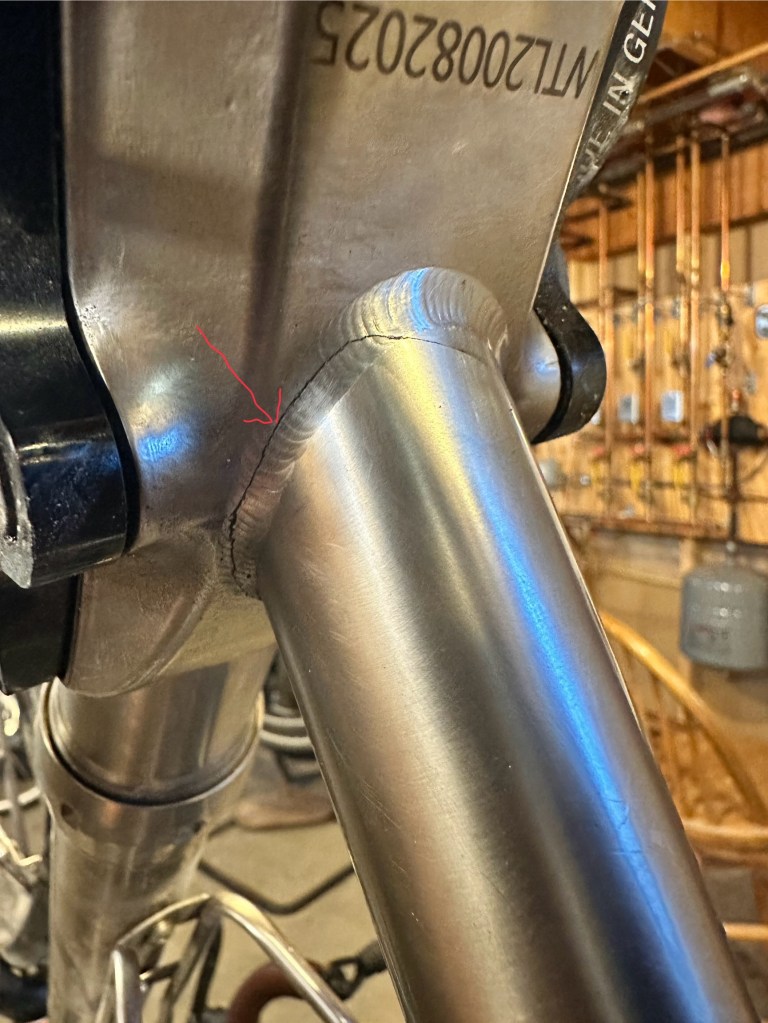
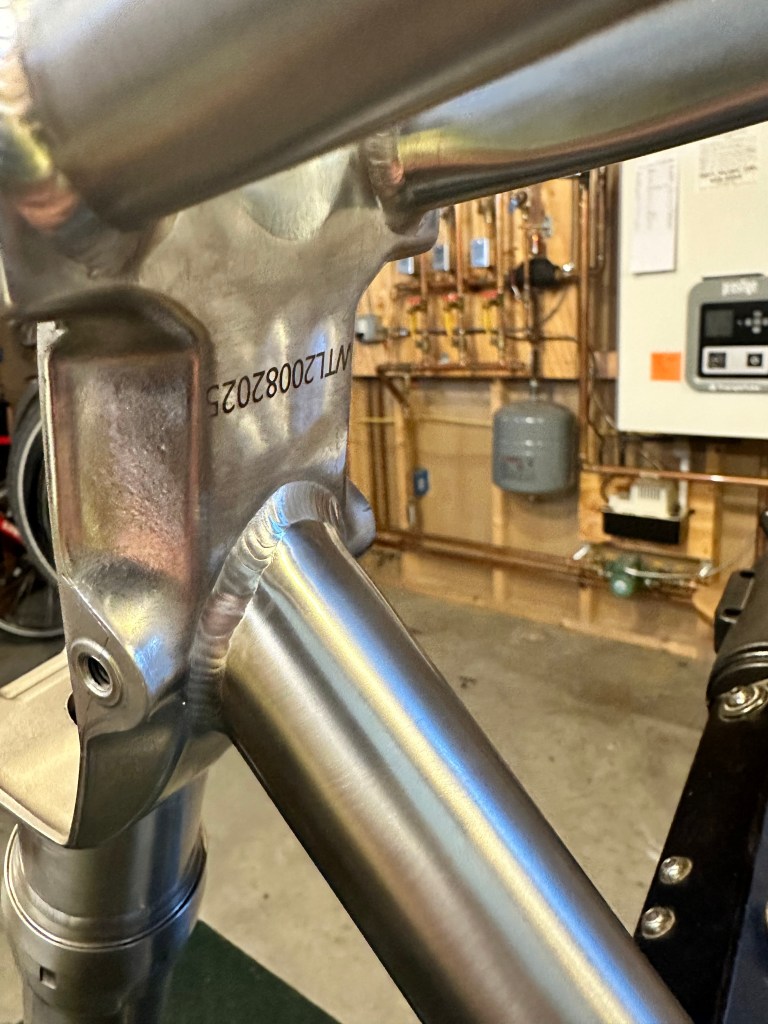
Titanium. Sounds exotic, but it’s actually the seventh most common metal on earth, titanium oxide is the chief ingredient in white paint. Purified, not only is it much stronger for its weight, but it has a resiliency, a combination of rigidity and shock absorption that rivals steel, much heavier. Aluminum is light too, but rock hard, riding over bumps is a real boneshaker. Titanium doesn’t rust, looks pristine after winters of road salt and summers of sweat exposure. You don’t need to paint it, if you like gunmetal gray (I had my logos etched in, so there’s no decals to chip or peel off). The other high-end frame material, carbon fiber, is glued together and can’t be repaired. Titanium is welded (has to be done in an inert gas atmosphere, one of the reasons why it’s so expensive); I had a crack appear after 4.5 years and 20,000 miles, it was repaired under warranty, check out these before-and-after pictures.
Pinion drive. You boomers out there, remember our old Raleigh three speeds? The flimsy lever on the handlebars, the gears all inside the rear hub with the little chain coming out, pulled by the gear cable?
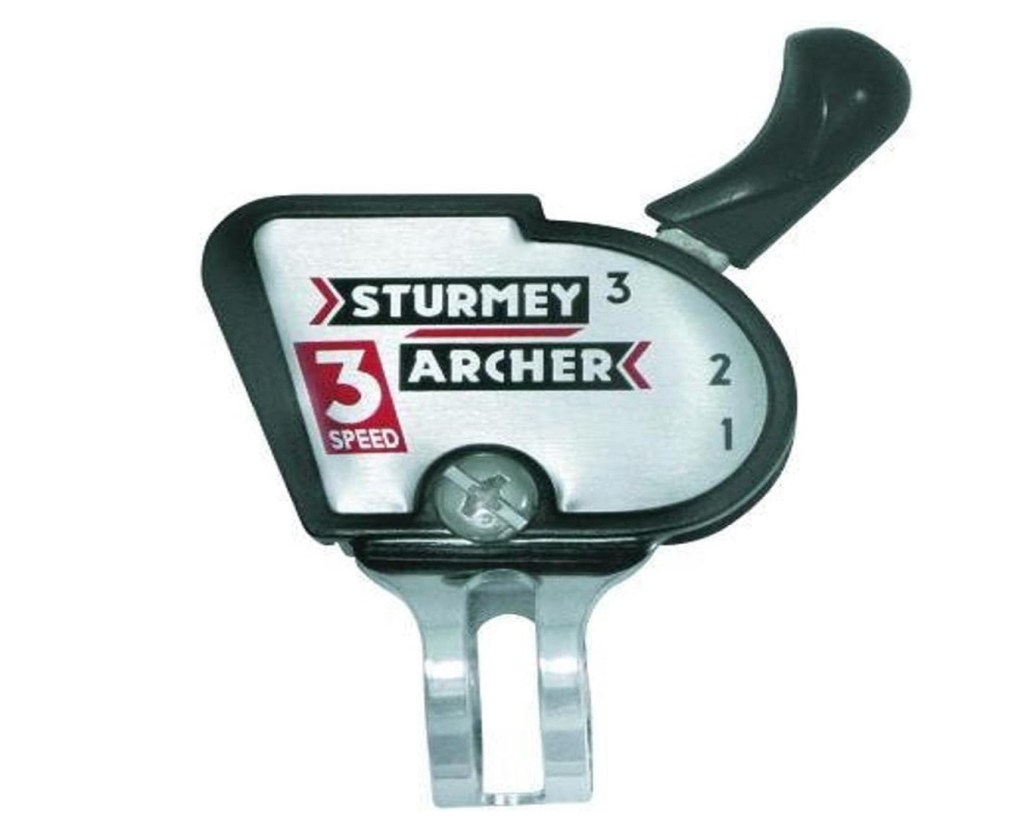
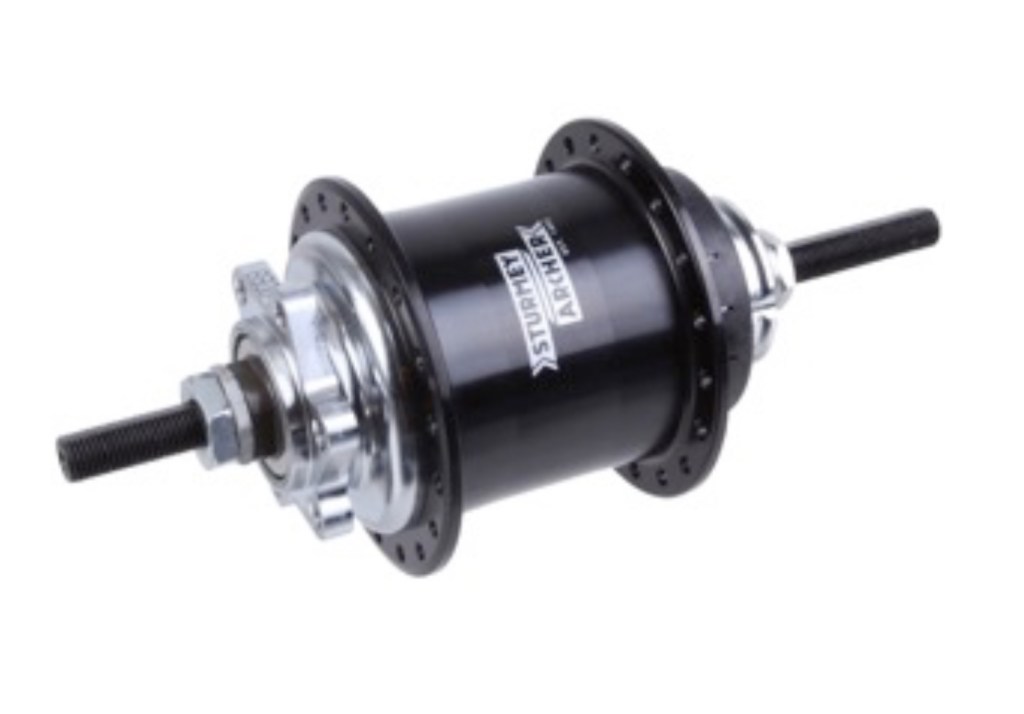
They had a narrow range and were clunky and inefficient, but totally protected from the elements. We all couldn’t wait to upgrade to ten-speeds with their fancy derailleurs. Over the years, these evolved to as many as 30 speeds. Triples up front, 10 cogs in the back, efficient but fussy, messy, needed constant tweaking.
Lovers of “loaded touring” like me need a very wide range, super-low granny gears for uphill, high gears so you wouldn’t spin out going downhill. To do that you needed that triple up front, but these were being phased out. After a while, I couldn’t get replacement parts, even on eBay. I saw the writing on the wall. Internal gears were calling me back.
Fortunately, the technology had advanced. I chose Pinion, a German company founded by two Porsche engineers, because the gears were in the bottom bracket, not the rear hub. The P1.18 had 18 of them, with a 626% range, in a sealed unit that needed no maintenance at all (well, you had to change the oil every 6000 miles).
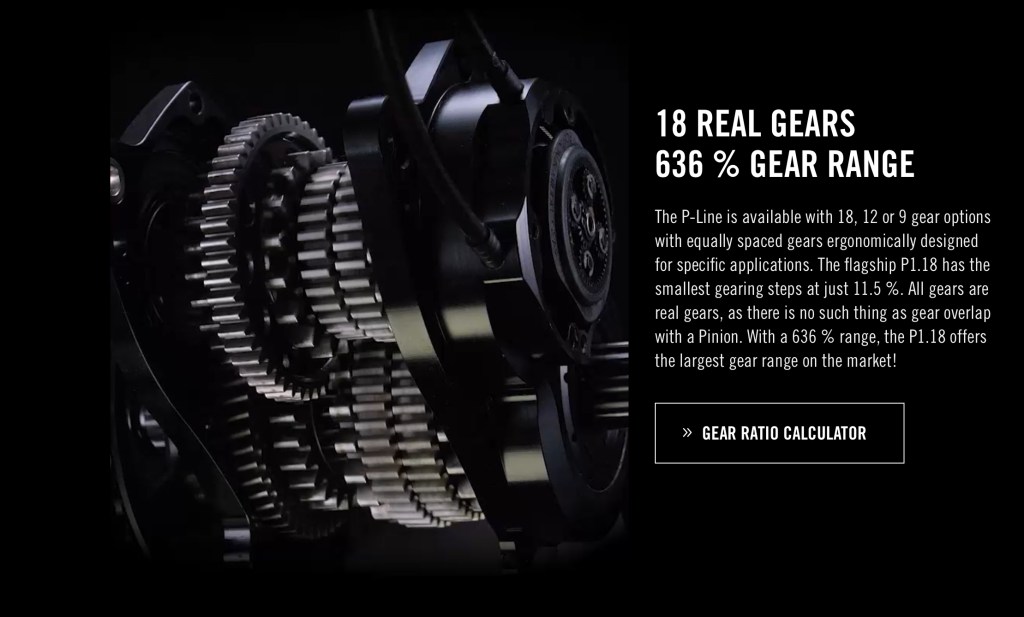
Paired with a Gates carbon belt, that also lasted for 6000 miles, you could forget about your drivetrain; no futzing, no adjusting, no lubrication, just hose it off or let the rain clean it. This picture says it all. For all of my anguish in the ankle-deep mud in Wisconsin on 5/24/21, my gears were one thing I was not worried about.
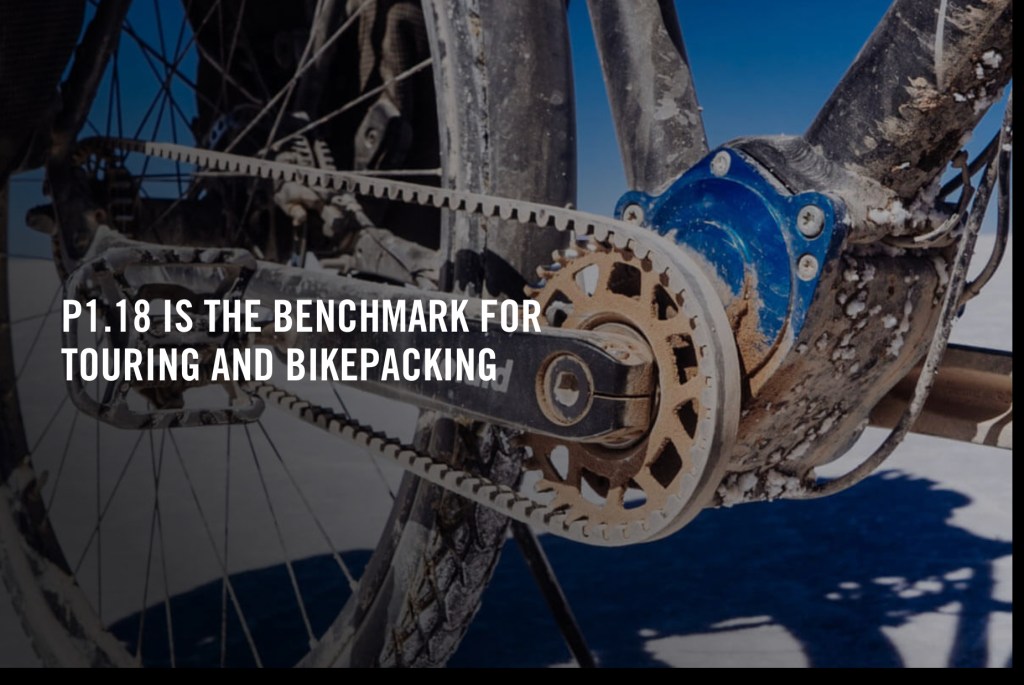
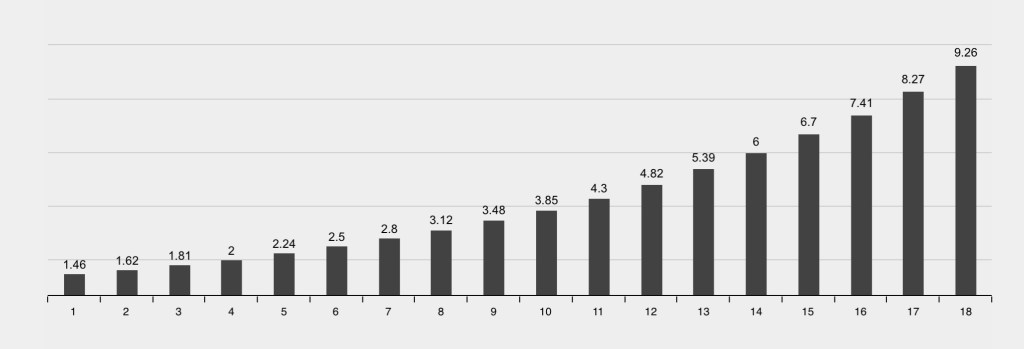
You may ask, what on earth do you need 18 gears for? Pinion has them spaced out evenly, every time you shift, the change in effort is 11%, up or down. Especially with multiple chain rings, derailleurs can’t offer that evenness, often there is redundancy.
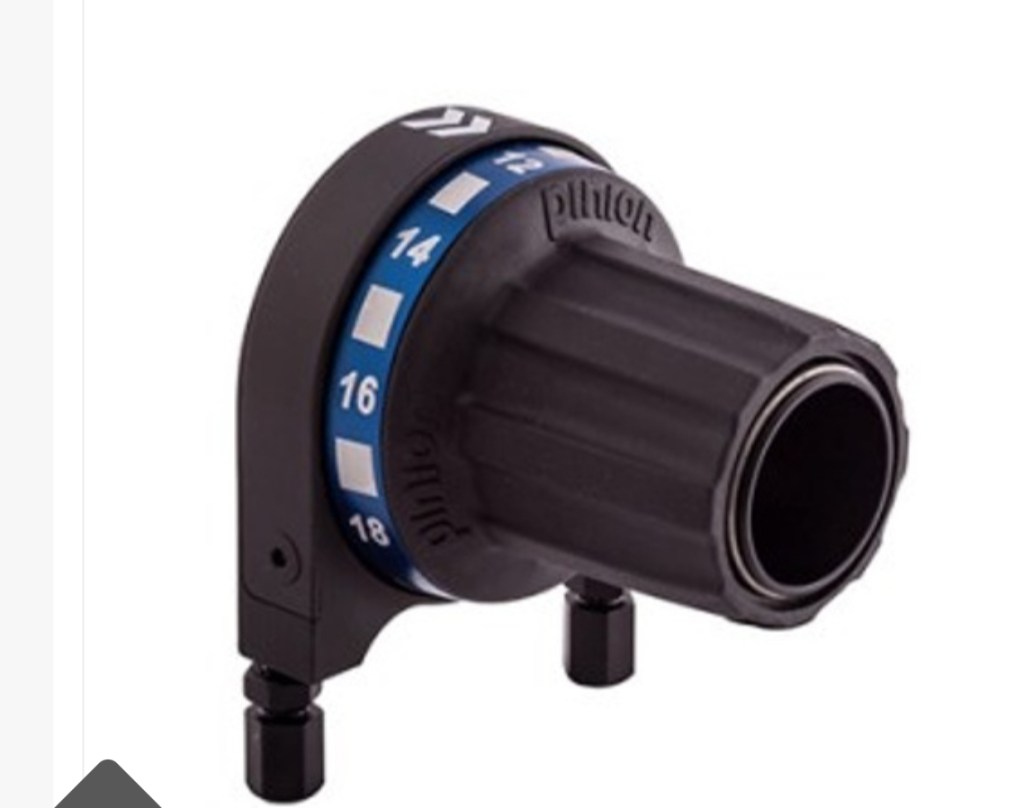
The design requires a grip shifter, which took some getting used to. Now that I’ve adapted, I love it. Cables control the shifter in both directions, there is no relying on a return spring to shift in the other direction. I have mine mounted on the end of my right drop handlebar, and it’s kind of like adjusting the temperature in the shower. You just twist it slightly to the right or the left until you get the exact ratio you want.
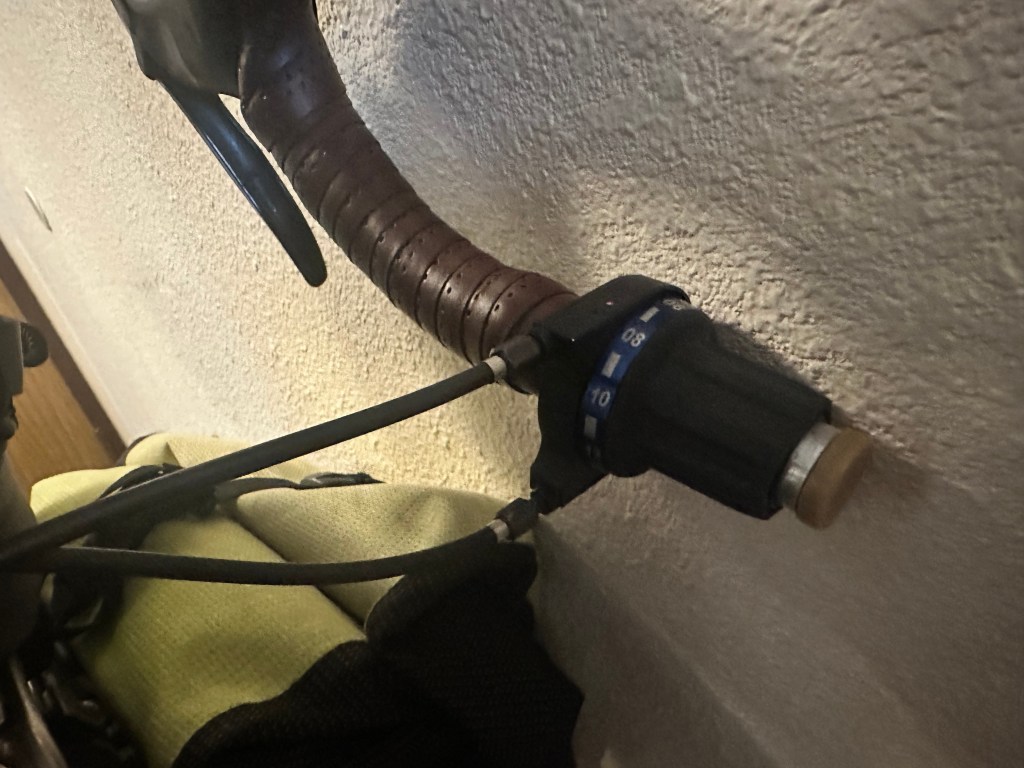
There are some downsides. It’s heavy, the gearbox alone weighs 6 pounds, the total setup is about 2 pounds heavier than an equivalent derailleur setup. You can’t shift under load, you have to ease up on the pedals for a fraction of a second to make a shift, although this becomes intuitive quite quickly. What you can do is shift multiple gears when stopped, a big advantage at stoplights. No internal gearbox can be as efficient as a perfectly tuned derailleur system, 90% versus 98% efficiency. But the fact is, most derailleur systems are not perfectly tuned, they get out of adjustment easily, and their efficiency plummets as the chain wears, the lube dries out, the cogs deform, the pulleys get rusty.
And of course, it’s expensive, and you have to have a specially modified frame. This puts it beyond the reach for the casual bike user, but for a guy like me, for whom his bicycle is his primary means of transportation, it’s worth it. Once you try it, you’ll never go back. They’ve just come out with an integrated motor system, this video is a little overblown, but I do think this will be the wave of the future. https://youtu.be/pHkrEpm5hcA?si=pIV4P8F4pIwVJybN
Für das deutsche Vaterland. The Pinion gearbox is German, I’m German, and Teutonic pride led me to choose a trio of German accessories.
My lighting system is by Schmidt, who makes the most efficient hub dynamos, paired with Edelux LED head and taillights
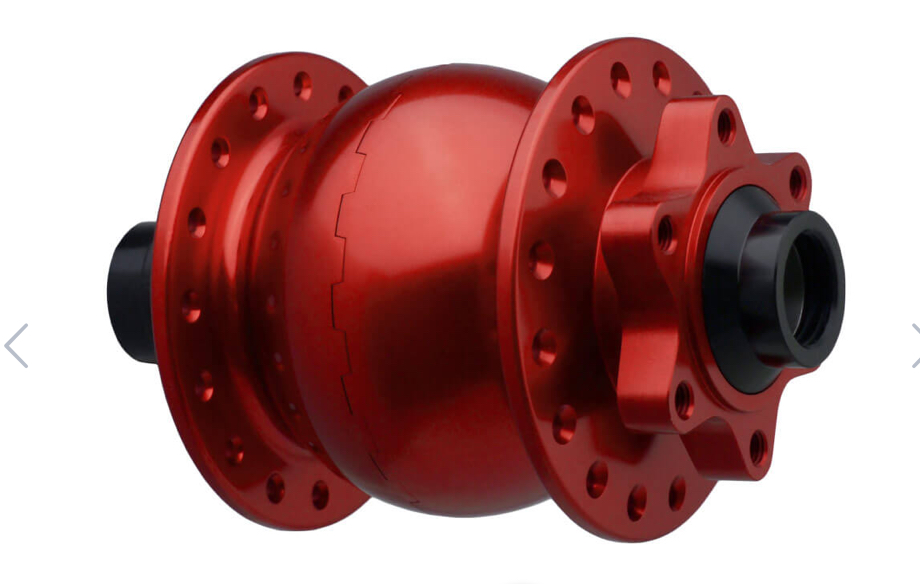
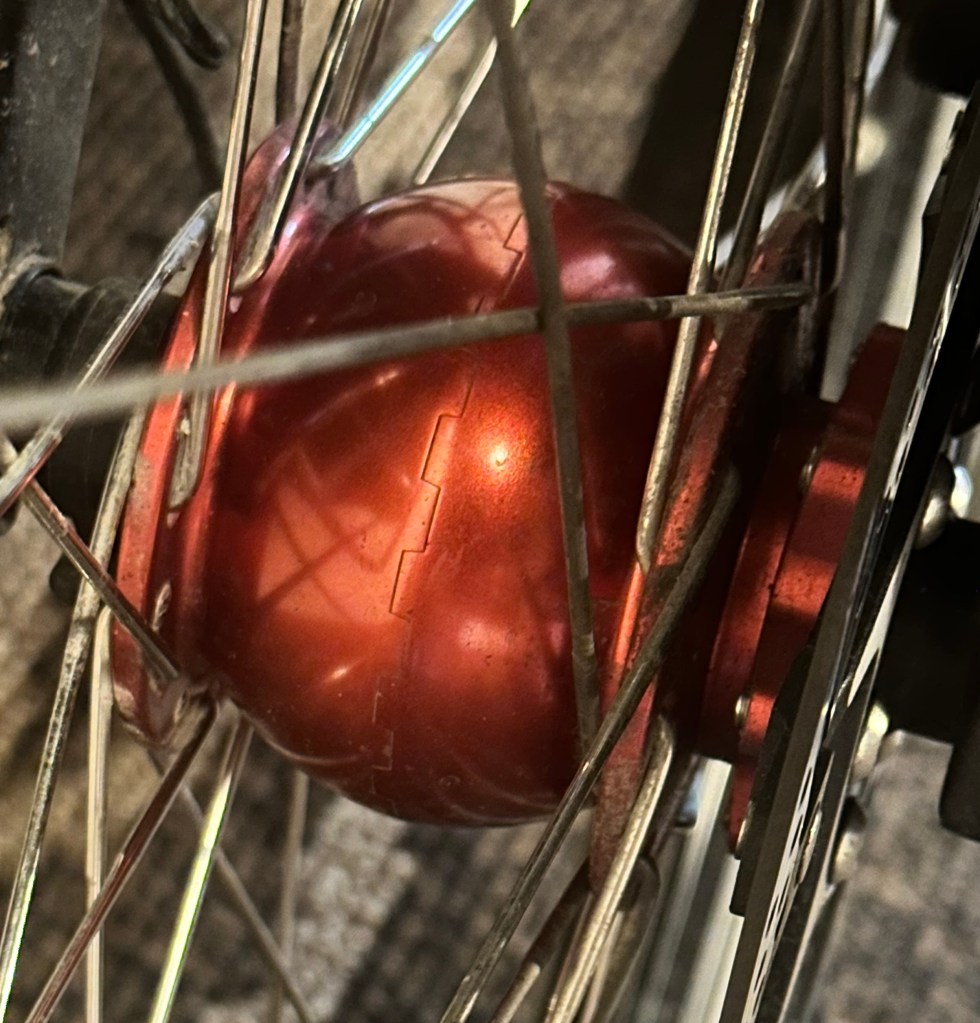
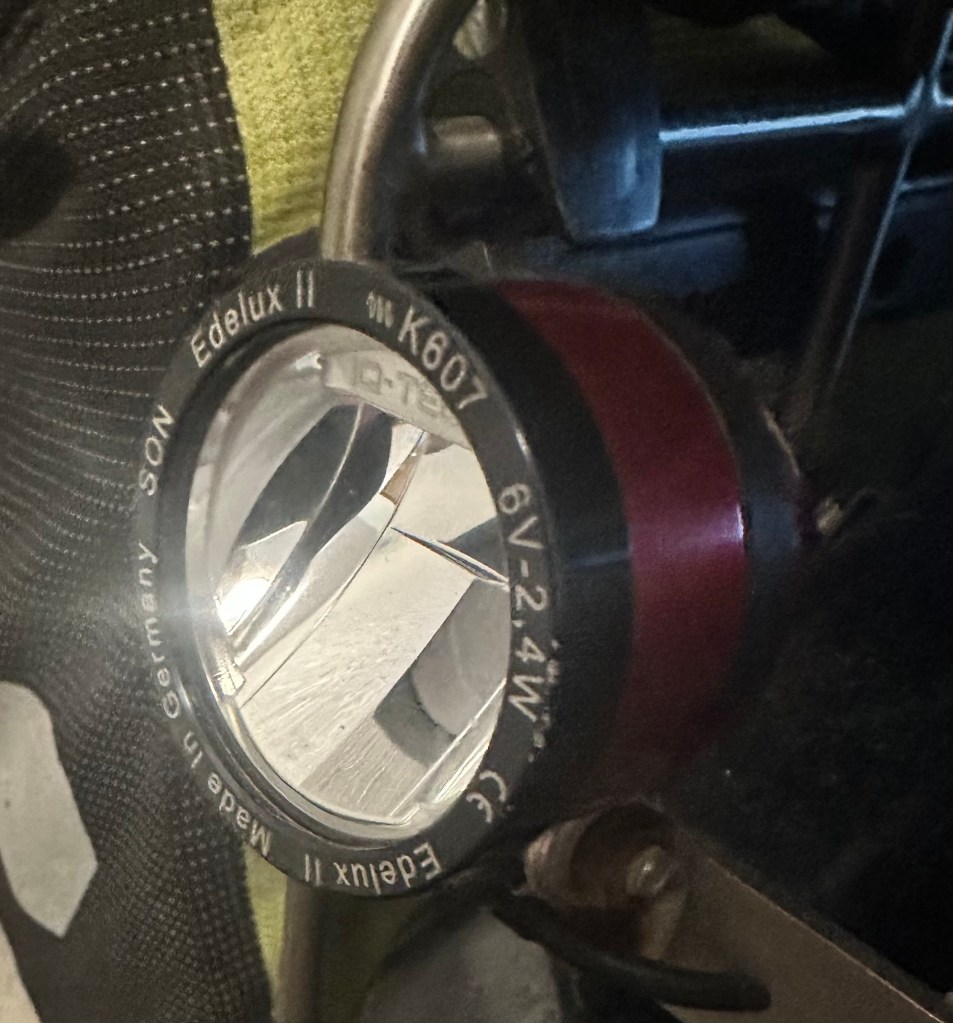
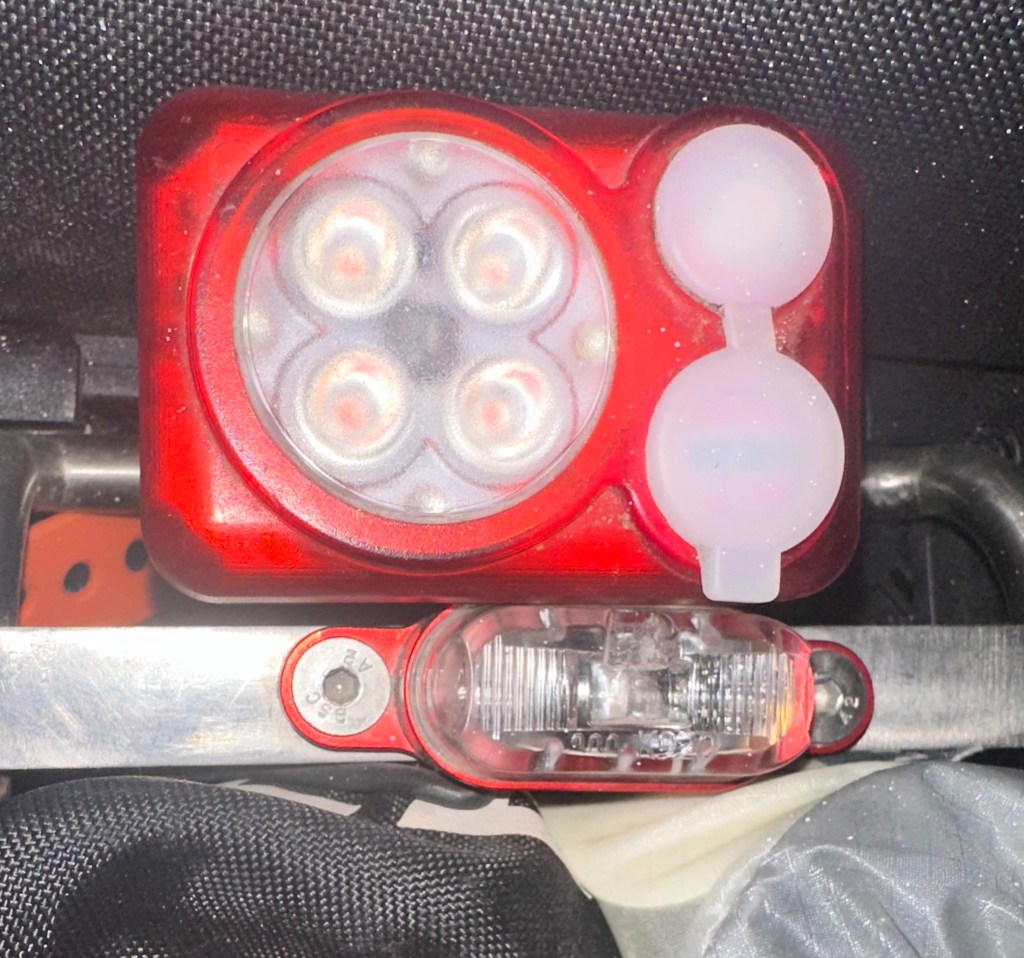
The lights are on 24/7, never burn out, and produce minimal drag. There’s a built-in capacitor called a standlight, allowing the lights to remain on for seven minutes after you come to a traffic light. Brilliant.
My panniers are all Ortlieb, all the time. Impregnated with Illuminite reflective threads, they kept everything dry in those days of constant Pacific Northwest rain.
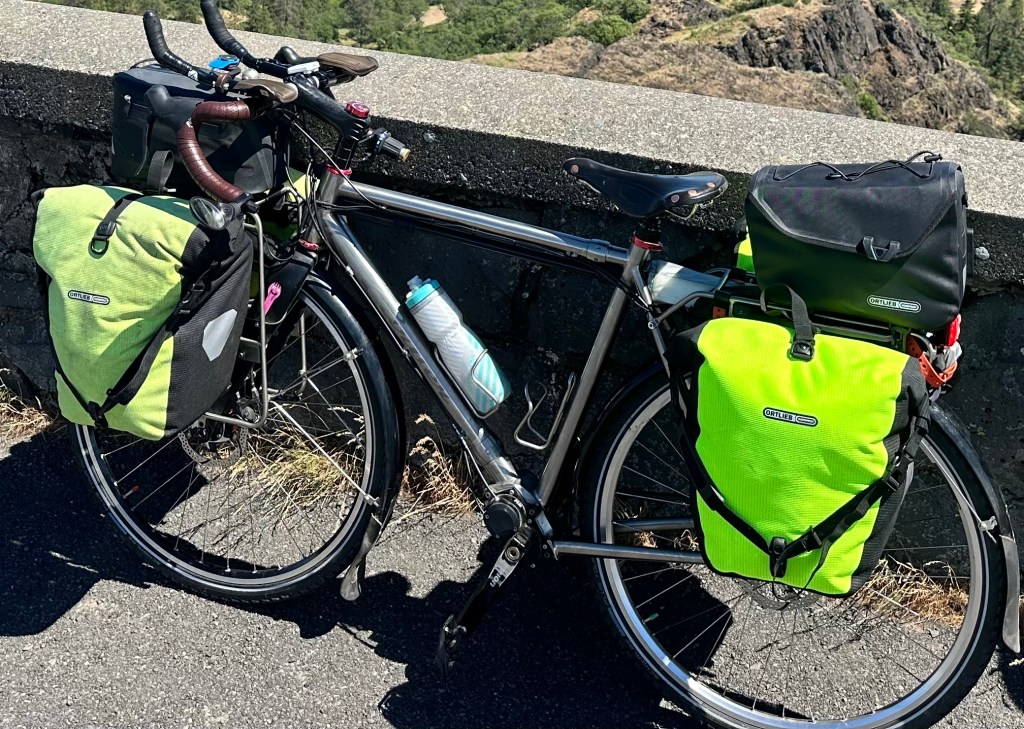
Finally, the tires are Schwalbe Marathon Plus, heavy, slow, indestructible. I’ve had one flat in 7,000 miles. In winter, I use the studded version.
Brooks Saddle. I’ve already sung the praises of my Brooks B-17 leather saddle, when fully broken in there is nothing more comfortable. Now that I have a dropper post it’s even better, I can lower it for mounting and dismounting, raise it to my usual riding position, and even the higher for ultimate efficiency. The English company also makes my handlebar grip tape, indestructible.
Pedals. The Japanese component on my bicycle. Shimano has been making state of the art equipment for decades. My pedals are their XTR platforms, they clip into my SPD cycling sandals, but can also be used with street shoes. Many people are nervous, to have their shoes clipped in like that, but they pop out easily, ensure perfect foot/pedal alignment, and allow you to pull up as well as push down.
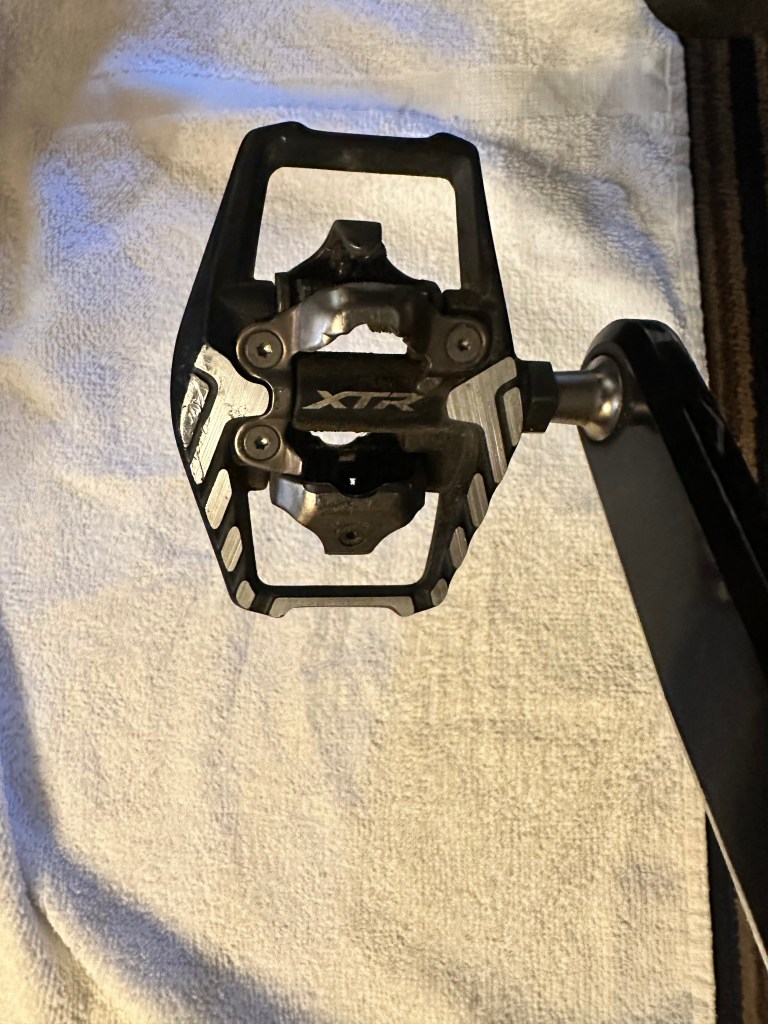
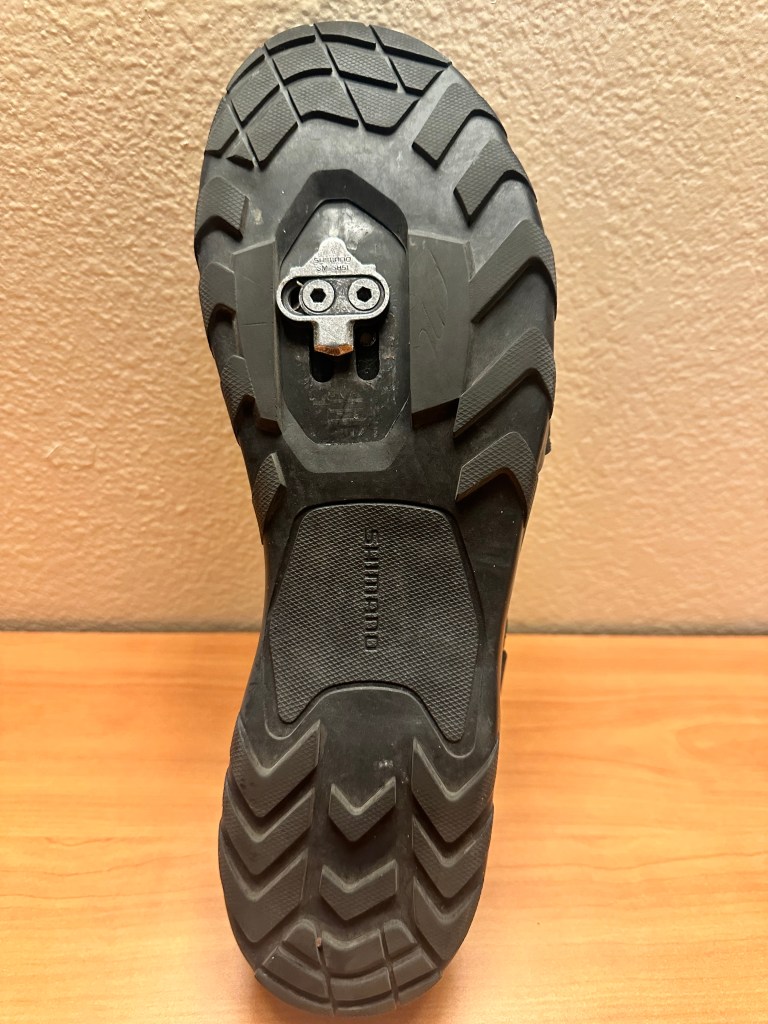
I should probably pause to explain here why I wear cycling sandals, subjecting the world to my ugly feet. They’re just so comfortable. Cool in the summer, they dry off quickly after rain, I hate cycling in wet socks. I can get pretty sore after 50 miles, but they have a textured footbed; if I loosen the straps, they massage my feet with every stroke. They’re not high-performance, but then, neither am I. When it gets cooler or wetter, waterproof socks and toe covers make them quite warm, good down to 35°.
Brakes. Spyre TRP mechanical disc brakes with dual pistons. Disc brakes are becoming the standard for all bicycles, an improvement over the classic rim brake, which can overheat on braking descents , and cause a blowout, they also wear out the rim. Disc brakes work in the pouring rain, are unaffected if your wheel goes out of true, and have much more stopping power for the same effort than traditional brakes. Hydraulic brakes offer better modulation and even greater power, but you need special tools and they have to be bled periodically.
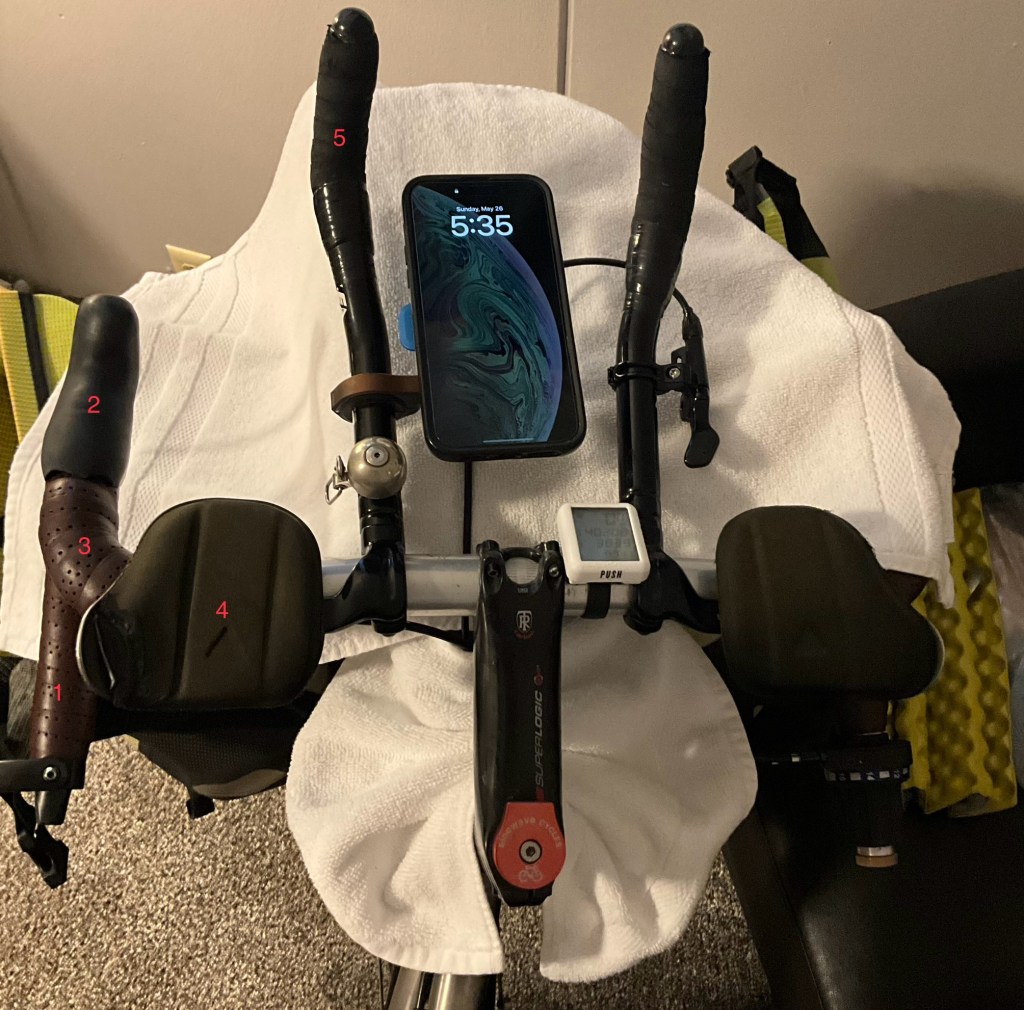
Aero bars, AKA bullet bars, let you get into a fuller tuck in headwinds, and give your hands a rest. Conversely, you can also rest your hands on top of the elbow pads for an even more upright position. They also provide additional mounting space for my bell, phone, and the control lever for the dropper post. Which brings up the big advantage of drop bars as opposed to flat handlebars. I have five different ways I can grip the handlebars (numbered in the photo, to grip at # 5, you rest your elbows at #4), and I use them all. It really helps on long rides. I’m mostly at position # 1, down in the drops. It took some getting used to, but once my body adapted, I found it much more comfortable.
USB port. The Sinewave Cycles (Cambridge MA) Reactor lets you divert some of the dynamo current to recharge your phone. This is one item that works better in theory than in practice. I have my lights on 24/7, when you do that you have to go 10 mph to charge the phone. My average speed typically hovers around 10 mph, so the charge keeps kicking in and out, and every time the phone pings annoyingly and the screen lights up. I suspect this burns up more energy than I’m supplying. Might make sense to use on a long downhill, but I typically rely on power bank back ups for the phone.
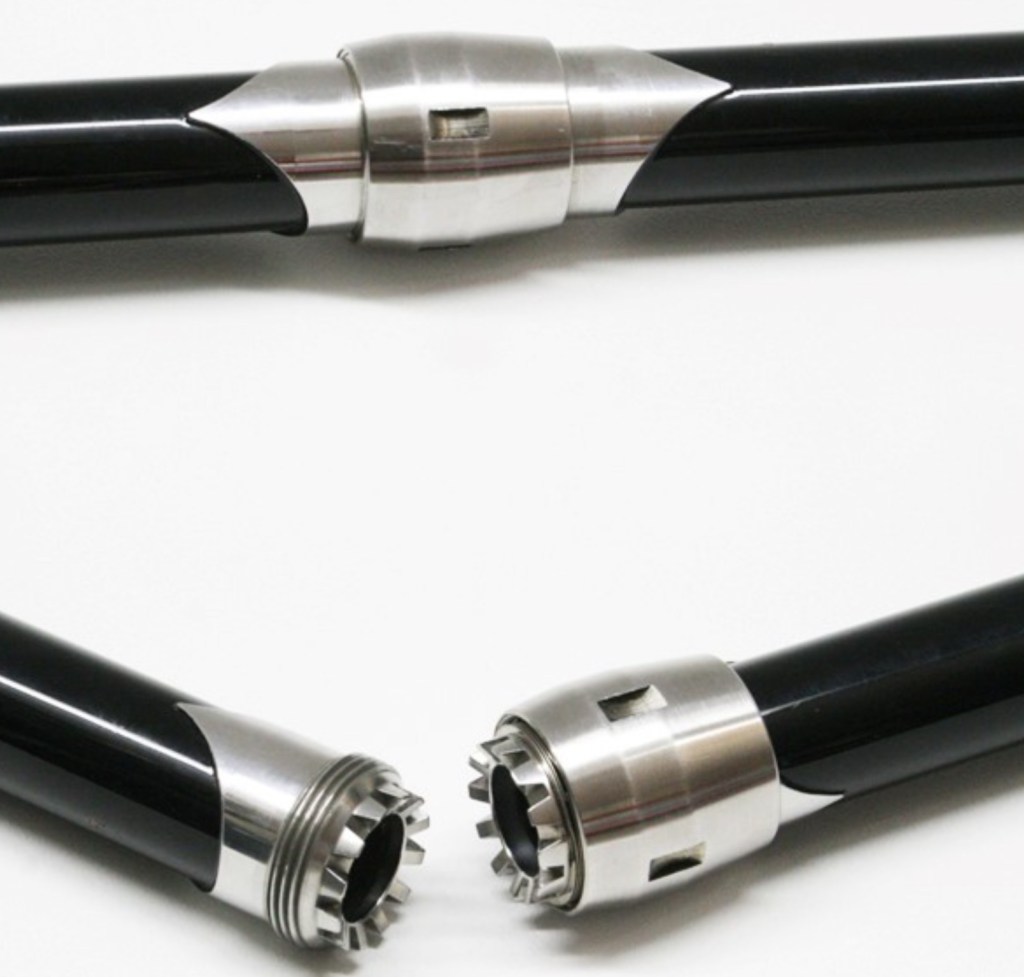
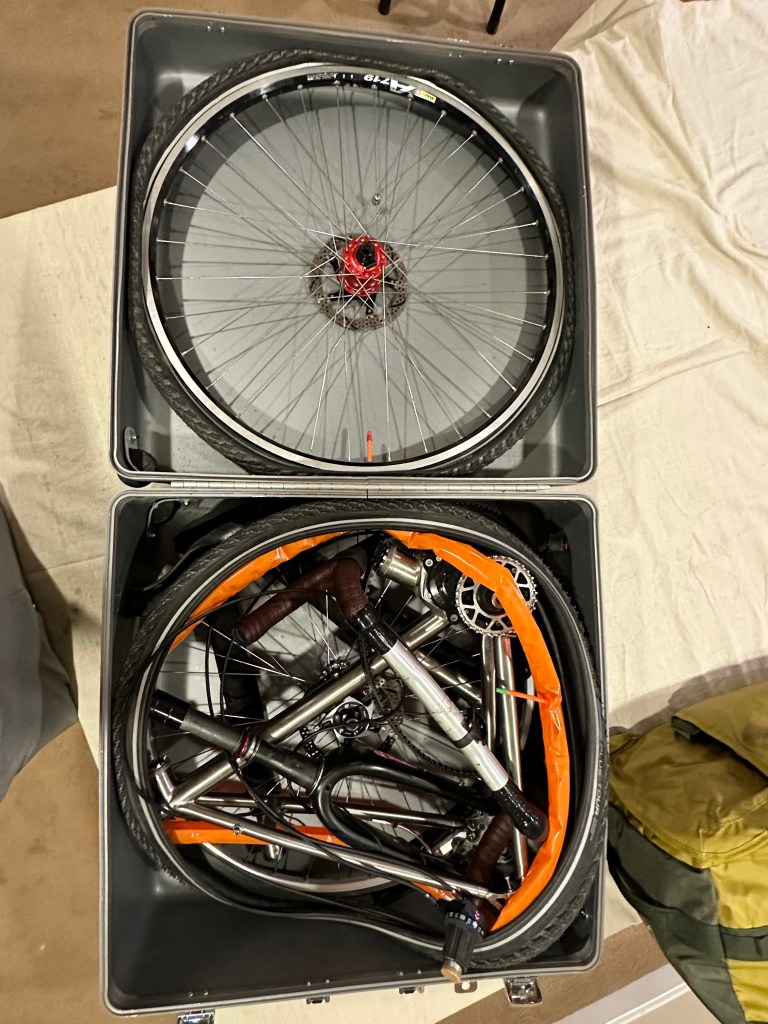
Couplers let you break the bike in half to fit into a regulation suitcase, and save on excess baggage fees. The clever dragon-tooth mechanism is actually stronger than the frame itself, like a healed broken bone.
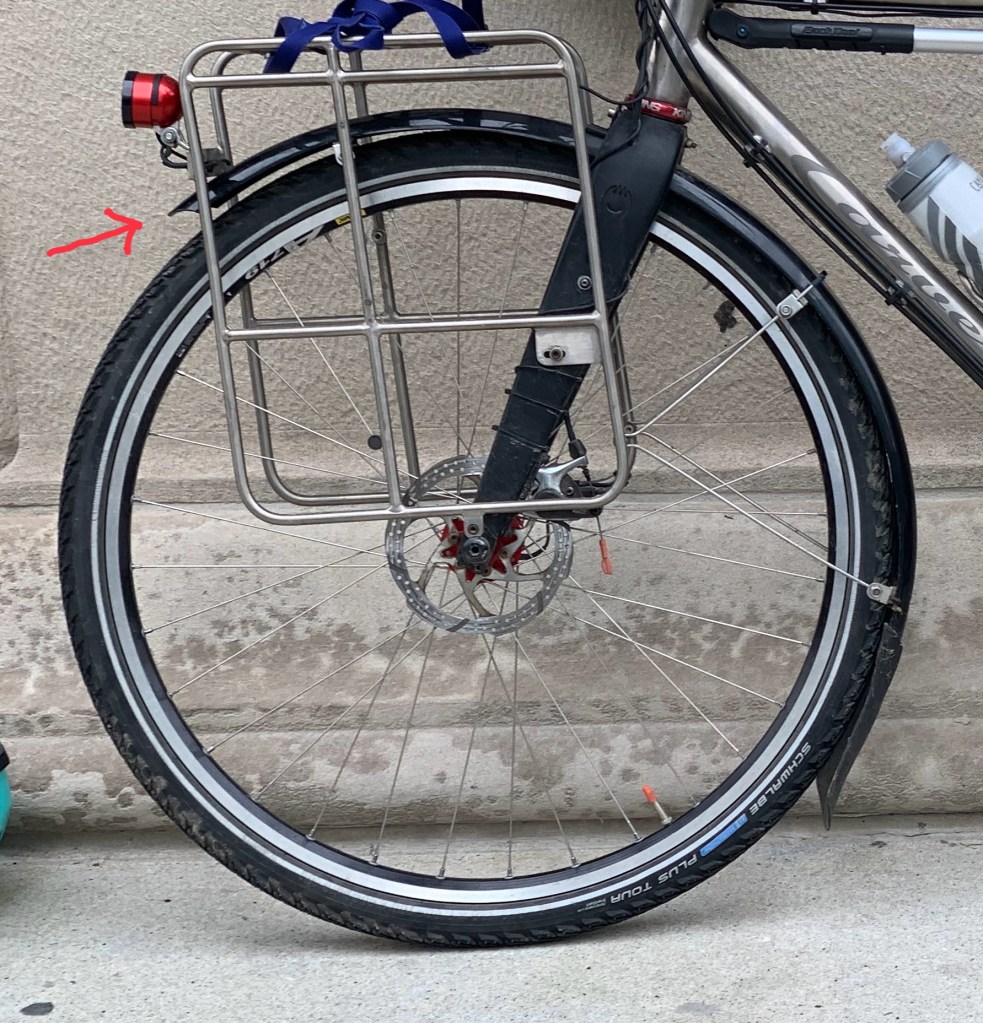
Fenders. We used to hate them: heavy, rusty, noisy, and ugly. The newer ones are plastic and quite light, make it big difference in the rain. No more black stripe up your back. If you’re going to get wet, better from the clean rain above than from the filthy grit kicking up from your wheels. I modified the front fender by trimming a second rear one, to give more coverage to my headlight. Planet Bike Cascadia, Wisconsin.
Frame-fit pump (mine is the classic Italian Silca) can fill your tires faster that a mini pump. Many use CO2 cartridges instead, but you’re stuck if you deplete them. Plus, CO2 gas is polar and diffuses through rubber more than room air; you need to top up more often.
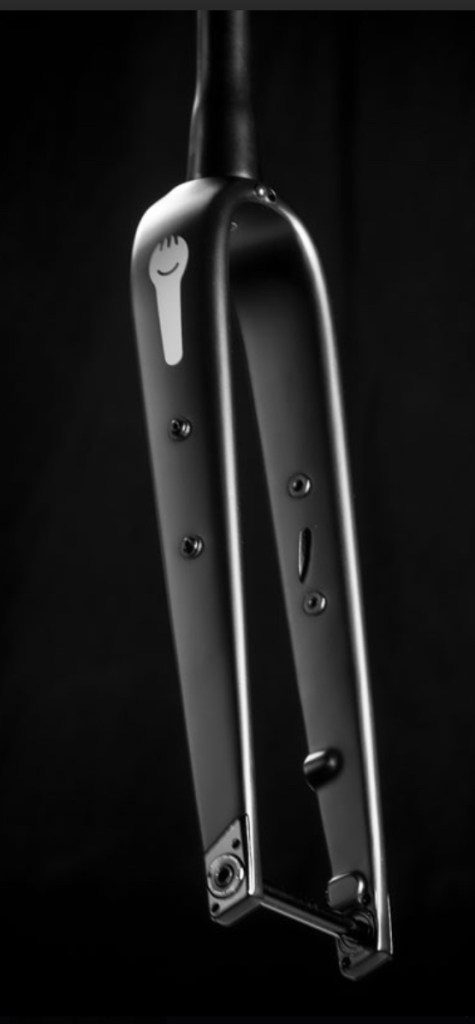
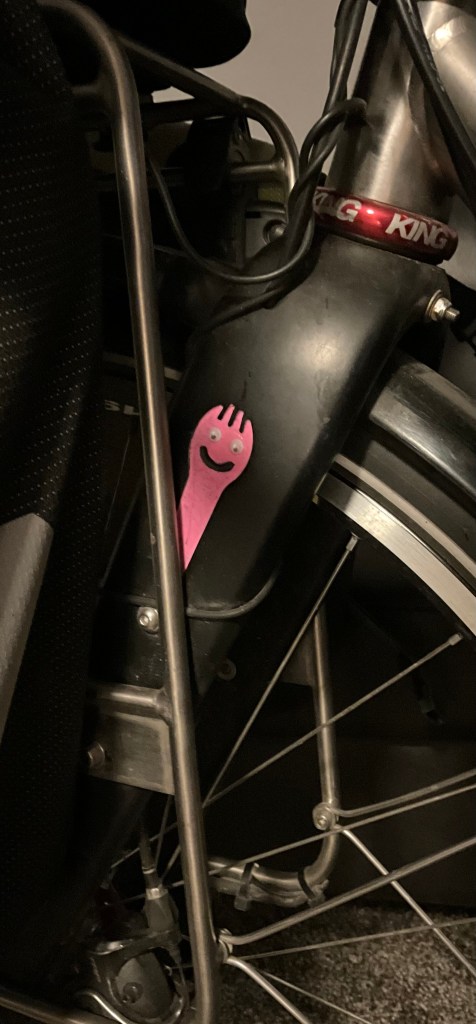
Fork. Titanium forks tend to be too flexible, so I chose a carbon fork, a Spork 2.0 by Rodeo Labs of Colorado. It has fender and rack mounts, and internal wiring from the generator. I added the googly eyes.
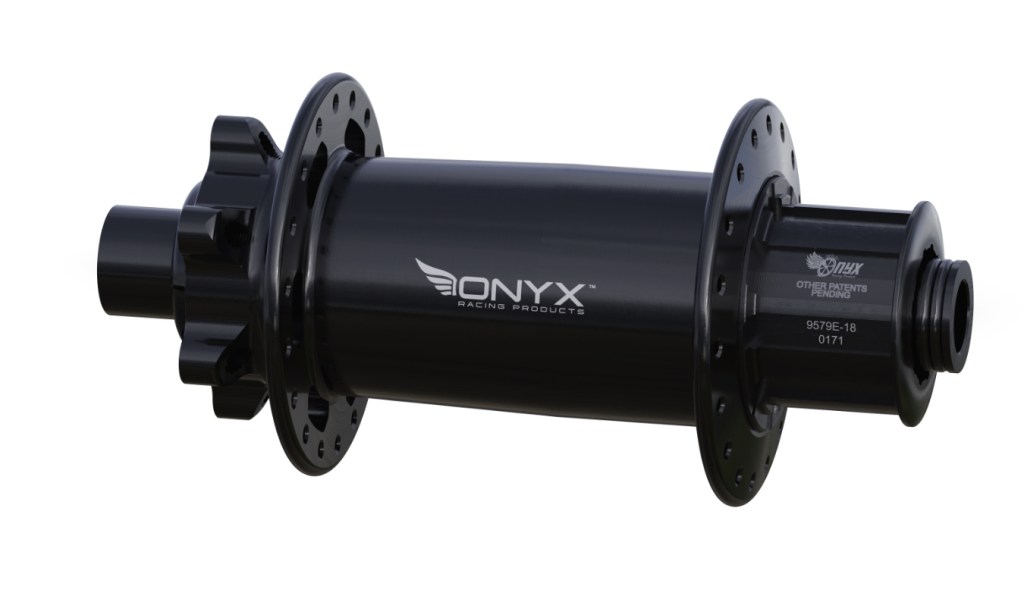
Rear hub by Onyx in Minnesota, has a sprag clutch rather than traditional pawls; less drag and it coasts silently. Stealthy.
Rear flasher. The Edelux generator taillight is quite bright, and suitable on its own for most occasions. In the city, and on sketchy roads, I turn on my DiNotte (New Hampshire, a charge lasts 6 hours at full power) quad red flasher, so bright it’s almost obnoxious, even in broad daylight. I remember one Saturday night, a drunk yelled out his car window, “Turn off da f_ckin’ lights!”
There’s more, but this is enough. Minnesota. Maine. Colorado. Massachusetts. New Hampshire. Wisconsin. Germany. China. Britain. Japan. Italy. Switzerland (spokes). France (rims). My bike is a veritable United Nations, living in harmony. And the whole is greater than the sum of the parts.
All those parts add up, the bare bike (with racks) weighs 35 pounds, surprising for a titanium bicycle. But it handles like a thoroughbred, managing the bumps silently, with no chain slap or derailleur rattle. I’ve ridden it almost every day, through five Vermont winters, and it still looks pristine.
My steed. My machine. My bike.
©️ 2024 Scott Luria
* For my 50th birthday, Jane gave me a custom-made bike from Seven Cycles, a high-zoot builder in Watertown MA. Their local representative, David Porter, spent hours measuring (it seemed) every bone in my body, making a mock up and having me ride it around for half an hour, then making further adjustments before sending the specs off to the factory. It was like getting fitted for a bespoke suit on Savile Row. Fits me like a glove. The trouble is, once you’ve ridden a custom bike, it’s hard to ride any other.
I loved that Seven, still do, but the triple derailleur is wearing out, I can’t get a replacement, and Seven doesn’t do Pinion-compatible bikes.
 The Ends of the Earth
This hardly normal old lady found this post fascinating. I’m not a techie by any stretch of the imagination but Scott made it understandable and interesting. I studied each photo minutely and read each section at least twice. I now have a great appreciation for your choice of transportation. Thank you, your favorite step-mom, Ann
LikeLike